
Introduction to Jenna Ortega Height
In a world obsessed with metrics—followers, income, ratings—it’s almost predictable that even a person’s physical existence gets reduced to numbers. Among the most quietly persistent of these measurements is height. And when it comes to celebrities like Jenna Ortega Height, the question lingers with surprising intensity: How tall is she?
At first glance, it seems harmless. Curiosity, perhaps. But linger on that question long enough, and it begins to reveal something deeper—something cultural, even political. Why do we care so much? And more importantly, what does that say about us?
The Tyranny of the Tape Measure
Jenna Ortega Height, often reported to stand around 5 feet 1 inch (155 cm), exists in an industry that has long equated physical stature with presence, power, and desirability. Hollywood has historically favored Jenna Ortega Height—particularly for men, but increasingly for women as well. The runway demands it. The camera, we are told, “adds ten pounds,” but it also subtly manipulates perception, often privileging those who appear taller, longer, and more “statuesque.”
Yet Ortega’s success disrupts this paradigm. Her breakout role in Wednesday did not hinge on her Jenna Ortega Height but on her intensity—her gaze, her timing, her ability to command a scene without towering over it. She didn’t need to be taller. She needed to be undeniable.
And that’s precisely what unsettles the system.
A History of Shrinking Women
This isn’t new. For centuries, women have been metaphorically—and sometimes literally—shrunk to fit societal expectations. In the Victorian era, corsets compressed bodies into impossible shapes, while social norms compressed voices into silence. Even today, the language we use—“small,” “petite,” “delicate”—often carries an implicit value judgment.
Jenna Ortega Height, in this context, becomes symbolic. A taller woman is sometimes labeled “intimidating,” while a shorter one is “cute” or “approachable.” These are not neutral descriptors; they are cultural scripts.
Consider icons like Audrey Hepburn or Natalie Portman—both relatively petite, yet monumental in their impact. Their legacies were not diminished by their stature. If anything, their presence expanded the definition of what power looks like.
The Politics of Presence
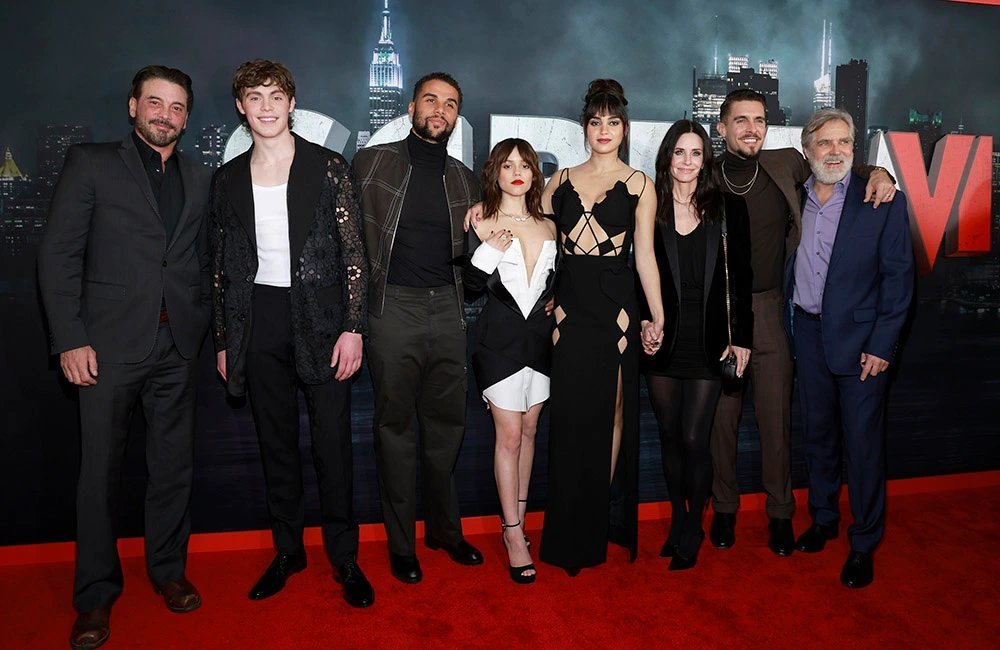
In political spaces, Jenna Ortega Height has often been correlated with authority. Studies have shown that taller candidates are more likely to be perceived as leaders. Think of figures like Abraham Lincoln, whose towering height became part of his mythos. But what happens when that same bias trickles into entertainment—and, by extension, into everyday life?
When audiences fixate on Jenna Ortega height, they are not just asking for a number. They are, perhaps unconsciously, asking: Does she measure up?
And the answer, repeatedly, is yes—but not in the way the question intends.
Ortega’s performances challenge the idea that physical scale equates to narrative importance. In Scream and other roles, she occupies emotional and psychological space far larger than her physical frame. She reminds us that presence is not a function of inches but of intensity.
Social Media and the Amplification of Measurement
The digital age has only intensified our obsession with quantification. Platforms like Instagram and TikTok thrive on metrics—likes, shares, views. In this environment, even identity becomes data.
Search trends reveal that “Jenna Ortega height” is a frequently queried phrase. It sits alongside questions about her age, weight, and relationships—as if assembling a dossier of measurable traits could somehow capture her essence.
But people are not spreadsheets. And reducing them to numbers—whether it’s height or follower count—risks stripping away the very qualities that make them human.
The Illusion of Objectivity
Numbers feel objective. They give us a sense of certainty in a chaotic world. But the meaning we attach to those numbers is anything but neutral.
Jenna Ortega Height, for instance, becomes a proxy for assumptions: confidence, attractiveness, capability. These associations are learned, not inherent. They are shaped by media, reinforced by culture, and internalized over time.
Jenna Ortega Height career exposes the fragility of these assumptions. She doesn’t conform to the traditional “leading lady” mold, yet she leads. She doesn’t dominate physically, yet she dominates narratively.
In doing so, she invites us to reconsider what we value—and why.
A New Kind of Measurement
What if we measured impact instead of inches? What if we asked not how tall someone is, but how deeply they resonate?
By that metric, Jenna Ortega Height stands tall indeed.
Her portrayal of Wednesday Addams reintroduced a classic character to a new generation, blending gothic detachment with emotional nuance. She became a cultural touchstone—not because of her height, but because of her authenticity.
And perhaps that’s the real lesson here: authenticity resists measurement.
FAQs
Q1: What is Jenna Ortega height?
Jenna Ortega is widely reported to be around 5 feet 1 inch (155 cm) tall.
Why do people care about celebrity heights?
Celebrity heights often become a point of curiosity because they offer a tangible way to relate to public figures. However, this curiosity can also reflect deeper cultural biases about appearance and value.
Does height affect success in Hollywood?
Historically, certain physical traits—including height—have been favored in Hollywood. However, many successful actors, including Jenna Ortega Height, have challenged these norms through talent and presence.
How does Jenna Ortega challenge beauty standards?
Ortega challenges traditional standards by succeeding on her own terms. Her roles emphasize emotional depth and individuality over conventional physical expectations.
What can we learn from this discussion?
The focus on height reveals how easily we reduce people to numbers. Jenna Ortega’s success reminds us that true impact cannot be measured in inches.
For More Update Visit: Glen Powell Height