Introduction To Timewarp Taskus
In today’s hyper-competitive digital economy, operational efficiency and data transparency are more critical than ever. Companies that manage global teams, remote agents, and high-volume workflows rely heavily on time management and performance tracking systems. One such system gaining attention is Timewarp TaskUs—a workforce management and time-tracking framework associated with TaskUs.
If you’ve searched for Timewarp TaskUs, you’re likely looking to understand how it works, its purpose, and how it impacts employees, clients, and operational performance. This comprehensive guide explores everything you need to know—from technical functionality and workforce optimization to compliance, transparency, and digital transformation strategies.
Whether you are an employee, HR professional, operations manager, or business leader evaluating enterprise solutions, this article delivers expert-level insights grounded in best practices and industry standards.
What Is TaskUs?
Before diving into Timewarp TaskUs, it’s important to understand the parent organization behind it.
TaskUs is a global outsourcing and digital services company specializing in:
- Customer experience (CX) support
- Content moderation
- AI data operations
- Risk and compliance services
- Back-office support
Founded in 2008 and headquartered in the United States, TaskUs serves high-growth technology companies across industries such as fintech, social media, e-commerce, gaming, and SaaS.
As a company built around performance metrics, digital workflow management, and distributed teams, TaskUs utilizes structured systems to monitor time, productivity, and operational accuracy. That’s where Timewarp TaskUs comes in.
What Is Timewarp TaskUs?
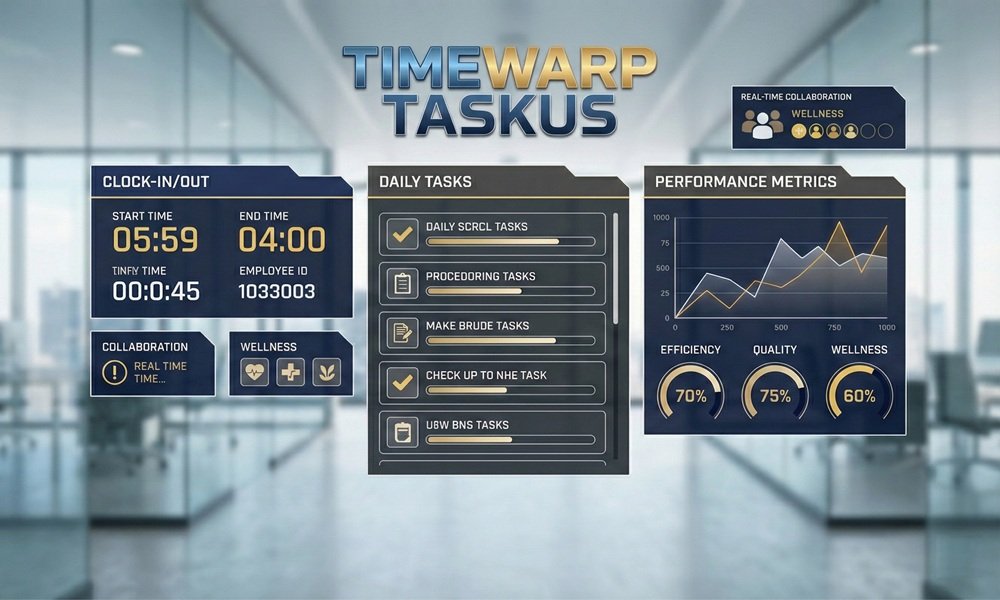
Timewarp TaskUs refers to an internal time-tracking and workforce optimization system used to manage employee attendance, productivity metrics, scheduling alignment, and operational transparency.
While not a public consumer-facing tool, Timewarp functions as a digital oversight and performance coordination system that enables:
- Accurate shift logging
- Attendance validation
- Time variance monitoring
- Productivity benchmarking
- Workflow synchronization
- Compliance auditing
In enterprise outsourcing environments, even minor time discrepancies can impact service-level agreements (SLAs), billing accuracy, and customer satisfaction. Timewarp TaskUs helps prevent those gaps.
Why Workforce Time Management Matters in BPO Operations
Time management systems like Timewarp TaskUs are not just about clocking in and out. In the Business Process Outsourcing (BPO) industry, time data directly influences:
1. Service-Level Agreement (SLA) Compliance
Clients expect precise turnaround times. Real-time tracking ensures commitments are met.
2. Payroll Accuracy
Accurate timekeeping protects employees and employers from disputes.
3. Performance Metrics
Time alignment correlates directly with productivity data.
4. Operational Forecasting
Time data feeds into workforce planning models.
According to workforce analytics research from sources like Gartner, companies leveraging advanced workforce analytics improve operational efficiency by up to 25%.
Core Features of Timewarp TaskUs
1. Real-Time Time Logging
Employees log their work sessions digitally. Timewarp ensures entries align with approved schedules and task assignments.
Key advantages:
- Automated validation
- Reduced manual time fraud
- Centralized time data dashboard
2. Variance Detection & Time Adjustments
Timewarp identifies discrepancies between scheduled and actual working hours. This allows supervisors to:
- Review attendance irregularities
- Investigishift overages
- Prevent payroll errors
3. Productivity Integration
Unlike basic time-tracking software, Timewarp TaskUs integrates performance metrics into logged time data.
For example:
- Calls handled per hour
- Tickets resolved per shift
- Content reviews completed per time block
This allows performance optimization tied directly to active working time.
4. Compliance & Audit Trail
In regulated industries such as fintech and social media moderation, compliance tracking is essential.
Timewarp:
- Maintains historical logs
- Preserves time adjustments
- Documents managerial approvals
- Supports internal audits
How Timewarp TaskUs Enhances Operational Efficiency
Centralized Workforce Visibility
Managers can monitor:
- Team availability
- Time adherence
- Utilization percentages
- Overtime patterns
This visibility reduces scheduling inefficiencies.
Data-Driven Decision-Making
Timewarp feeds operational dashboards that help:
- Predict staffing shortages
- Adjust shift rotations
- Improve workload balancing
Reduction of Time Theft
Digital monitoring discourages:
- Extended idle periods
- Inaccurate time claims
- Non-work-related clocked hours
According to Society for Human Resource Management, companies lose billions annually to time-related inaccuracies. Systems like Timewarp mitigate this risk.
Employee Perspective Transparency and Accountability
While time-tracking systems sometimes raise concerns about surveillance, well-implemented platforms offer benefits to employees:
- Clear attendance records
- Transparent performance metrics
- Reduced payroll disputes
- Structured shift management
When aligned with ethical monitoring practices, Timewarp TaskUs can build accountability without micromanagement.
Technology Behind Timewarp TaskUs
Although internal technical architecture details are proprietary, enterprise workforce systems like Timewarp generally rely on:
- Cloud-based infrastructure
- API integrations with HR software
- Secure login authentication
- Encrypted time logs
- Analytics dashboards
Given TaskUs’ technology partnerships and digital-first model, Timewarp likely integrates with HRIS platforms, payroll systems, and CRM tools.
Timewarp TaskUs and Remote Work Management
The rise of remote work significantly increased demand for reliable digital oversight systems.
During global remote expansion:
- Time tracking became decentralized
- Workforce visibility decreased
- Operational inconsistencies increased
Timewarp Taskus helps standardize digital presence verification and productivity monitoring for distributed teams.
Research from McKinsey & Company suggests companies adopting structured remote monitoring systems improved performance consistency by 20–30%.
How Timewarp TaskUs Impacts Client Trust
Clients outsourcing to TaskUs expect:
- Transparent reporting
- Accurate billing
- Predictable service outcomes
Timewarp supports:
- Billable hour verification
- Productivity documentation
- SLA accountability
This strengthens trust between TaskUs and its enterprise clients.
Ethical Considerations in Workforce Monitoring
Time-tracking systems must balance oversight and employee privacy.
Best practices include:
Clear Communication
Employees should understand:
- What is being tracked
- Why it is tracked
- How data is used
Limited Intrusiveness
Tracking should focus on:
- Time alignment
- Productivity correlation
—not personal surveillance.
Data Security
Sensitive employee data must be encrypted and access-controlled.
Compliance with labor regulations in regions like the U.S., UK, and Asia-Pacific markets is critical.
Comparing Timewarp TaskUs to Other Workforce Systems
Common enterprise alternatives include:
- Workday
- ADP
- Kronos
However, Timewarp TaskUs is tailored specifically to TaskUs’ outsourcing workflows. That specialization allows:
- Custom SLA integration
- Industry-specific performance mapping
- High-volume support environment optimization
Practical Use Cases of Timewarp TaskUs
1. High-Volume Call Centers
Tracks agent talk time, availability, and idle periods.
2. Content Moderation Teams
Aligns review time with policy compliance metrics.
3. AI Data Annotation Projects
Measures task throughput per hour.
4. Fintech Support Services
Monitors accuracy and compliance time logs.
Actionable Insights for Workforce Leaders
If you are evaluating a similar system, consider:
1. Align Time Data With Outcomes
Don’t track hours alone—connect them to measurable outputs.
2. Prioritize Transparency
Communicate tracking policies clearly.
3. Integrate With Performance Dashboards
Unified systems improve leadership visibility.
4. Audit Regularly
Quarterly compliance audits maintain system integrity.
Internal Linking Suggestions
If publishing on a business or HR blog, consider linking internally to:
- “What Is Workforce Optimization?”
- “Best Practices in Remote Employee Monitoring”
- “How BPO Companies Maintain SLA Compliance”
- “Digital Transformation in Outsourcing”
These strengthen SEO topical authority.
External Authoritative References (Suggested)
For additional credibility, reference:
- Gartner workforce analytics research
- McKinsey & Company remote productivity studies
- Society for Human Resource Management compliance insights
Frequently Asked Questions (FAQs)
What is Timewarp TaskUs used for?
Timewarp TaskUs is used to track employee time, monitor productivity alignment, and maintain SLA compliance in outsourcing operations.
Is Timewarp TaskUs public software?
No. It appears to be an internal system associated with TaskUs’ operational framework.
Does Timewarp TaskUs monitor employees?
It tracks work time and productivity metrics but should operate within compliance and privacy guidelines.
Why is Timewarp important in BPO?
Because time accuracy directly impacts billing, client trust, and performance reporting.
Conclusion The Strategic Importance of Timewarp TaskUs
Timewarp TaskUs represents more than a time-tracking tool—it reflects the modern evolution of workforce intelligence in global outsourcing.
In a digital environment where performance metrics drive contracts, trust, and scalability, systems like Timewarp ensure:
- Operational precision
- Workforce accountability
- Client transparency
- Regulatory compliance
- Scalable productivity
For organizations managing large distributed teams, structured time and performance tracking is no longer optional—it is foundational.
As digital services expand, the strategic value of platforms like Timewarp TaskUs will only grow, reinforcing its role in enterprise workforce management and operational excellence.
For More Update Visit: Ashton Kutcher Mila Kunis